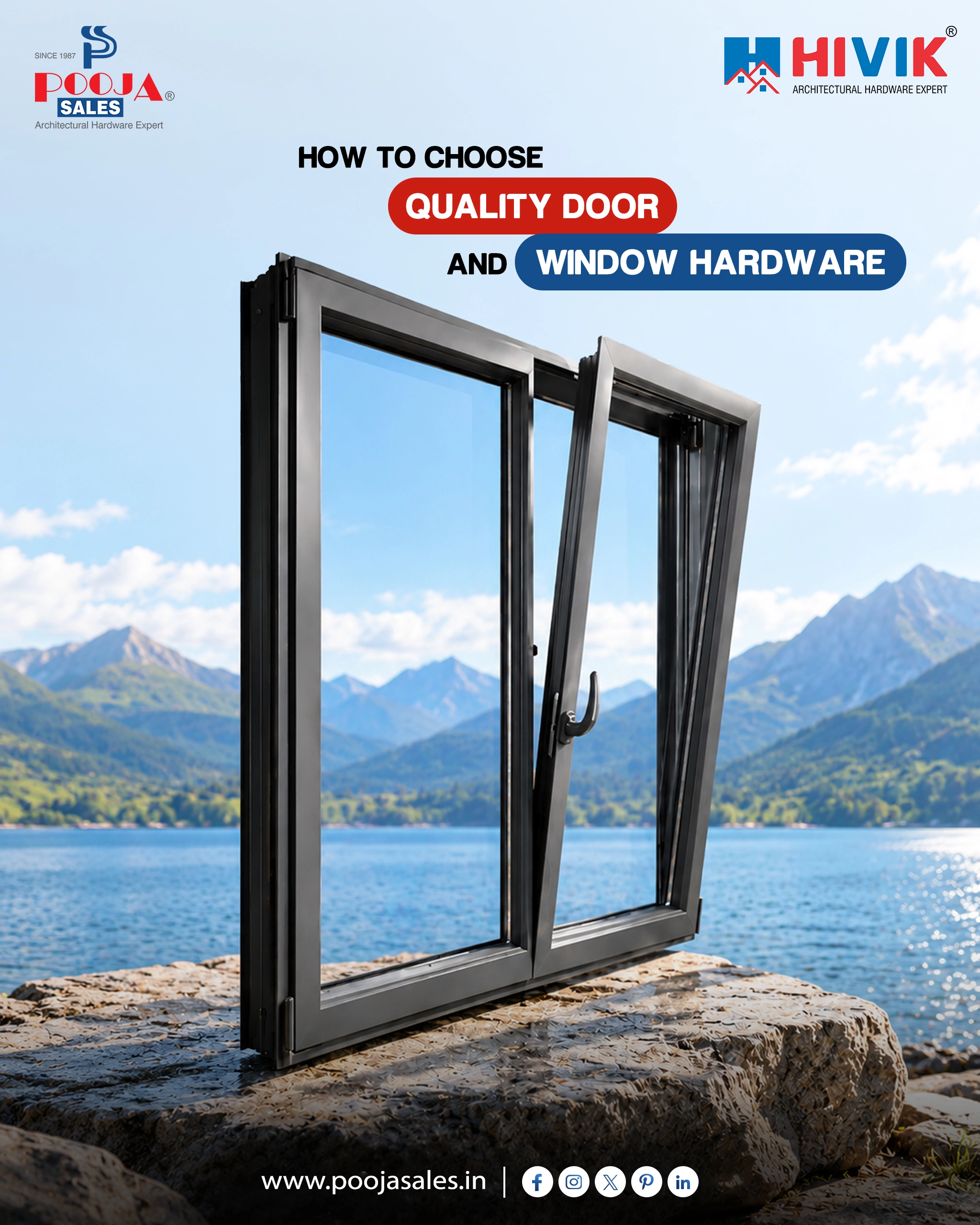
Choosing the right door and window hardware is essential for smooth operation, dependable security and long-term performance. Whether you are building a home, managing a commercial project or manufacturing aluminium and uPVC windows, the quality of the fittings matters.
However, not every handle, lock, hinge or roller suits every window and door system. You need hardware that matches your profile, opening style, usage requirements and environmental conditions.
Hivik Hardware offers architectural hardware solutions for aluminium and uPVC doors and windows, along with sliding and folding systems and customised product development. Understanding the factors below will help you make an informed purchasing decision.
To choose quality door and window hardware in India, check material quality, profile compatibility, load capacity, locking performance, corrosion resistance, installation requirements and after-sales support. Always match the hardware to your specific door or window system instead of choosing by appearance or price alone.
Table of Contents
ToggleUnderstand Your Door and Window Type
Before comparing hardware manufacturers, identify the type of door or window you are working with. Different systems require different components and operating mechanisms.
For example, sliding windows need compatible rollers and tracks, while casement windows generally require hinges or friction stays, handles and locking mechanisms.
Here are the main types to consider:
- Aluminium windows and doors: Require compatible locks, handles, rollers, hinges and other fittings designed for the selected aluminium profile system.
- uPVC windows and doors: Need hardware that matches the profile geometry, fixing points and operating mechanism.
- Sliding systems: Depend on suitable rollers, guides, locks and tracks for smooth movement.
- Sliding and folding systems: Need coordinated components that allow panels to move and fold correctly.
- Custom window and door systems: May require specially designed components to meet particular dimensions or performance requirements.
The key is to confirm the exact system before placing an order. Two products that look similar may have different dimensions or fixing arrangements.
If you are comparing options, exploreHivik’s aluminium window and door hardware and uPVC window and door hardware to understand the available product categories.
Check the Material and Build Quality
Material quality influences how hardware performs under repeated use and changing environmental conditions. Poorly selected materials or inadequate protective finishes can lead to premature wear, corrosion or operating difficulties.
When evaluating hardware, consider these factors:
Material suitability: The material should suit the component’s purpose, load and operating environment. Different applications may require aluminium alloys, zinc alloys, stainless steel or other suitable materials.
Surface finish: Check whether the finish is consistent and appropriate for the intended environment. Scratches, peeling or uneven coating may indicate quality concerns, although visual inspection alone cannot establish overall product quality.
Component strength: Handles, hinges, locks and rollers must withstand the loads and forces expected during normal use.
Manufacturing consistency: Components should have consistent dimensions, clean finishing and reliable assembly. This is particularly important when ordering hardware for large projects or repeated production.
Quality checks: Ask the manufacturer about inspection procedures, applicable test reports and quality-control practices. Request supporting documents where the project requires them.
A well-made component should be selected for its intended application, not simply because it looks premium.
Does the local environment affect hardware selection?
Yes. Humidity, rainfall, airborne pollutants and coastal exposure can affect hardware materials and finishes. Projects near the sea may need particular attention to corrosion resistance.
Ask your supplier which material and protective finish are appropriate for your installation conditions. Do not assume that every metal component offers the same level of protection.
Choose the Right Hardware Components
Each component performs a specific function. Understanding these functions helps you compare products and avoid buying unsuitable fittings.
| Hardware component | Main function | What to check |
| Window and door handles | Operate the opening mechanism | Grip, fixing dimensions and compatibility |
| Locks and locking systems | Secure the opening | Locking points, engagement and profile compatibility |
| Sliding window rollers | Support and guide sliding panels | Load capacity, wheel dimensions and track compatibility |
| Hinges and friction stays | Support and control opening movement | Sash weight, dimensions and opening direction |
| Espagnolette systems | Operate multiple locking points through a connected mechanism | Length, locking positions and profile fit |
| Sliding and folding accessories | Support coordinated panel movement | System design, alignment and component compatibility |
The correct combination depends on your complete door or window assembly. Selecting one component in isolation can create fitting problems or affect operation.
For example, a sliding window roller must suit the panel weight and track design. A visually similar roller may not provide the correct adjustment or fit.
Likewise, a locking system must align with its corresponding keeps and profile geometry. Incorrect alignment can make locking difficult and prevent the sash from closing properly.
Practical tip: Share the profile details, opening type, dimensions and application with your supplier before confirming the hardware specification.
Prioritise Security and Weather Resistance
Door and window hardware should support the security and durability requirements of the complete installation. The appropriate solution depends on the opening, its location and how the building will be used.
Evaluate the locking mechanism
Check whether the locking arrangement suits the opening type and intended security requirements. Depending on the system, this may involve a single locking point or a multipoint mechanism.
Confirm that the handle, lock, keeps and associated components work together. A strong lock cannot compensate for unsuitable fixing points or an incorrectly installed frame.
For residential and commercial projects, also consider who will use the opening and how frequently it will be operated.
Consider corrosion resistance
Hardware exposed to rain, moisture or coastal air needs suitable material selection and protective finishes. Ask about relevant corrosion-resistance test results when these conditions are important.
The Bureau of Indian Standards provides information on applicable Indian Standards and product requirements. Its IS 19609:2026 standard for uPVC profile-framed doors, windows and sliders covers complete systems, including hardware and fixing components. Confirm which standards and requirements apply to your particular product and project.
Check safe and reliable operation
Windows in elevated buildings, frequently used public spaces or areas accessible to children may need additional safety provisions. Depending on the design and applicable requirements, these can include restrictors, suitable locking arrangements or other safety devices.
Do not treat hardware selection as a substitute for proper window design, installation or project-specific safety checks.
Consider Compatibility and Installation
Compatibility is one of the most important factors when selecting door and window hardware. Even a well-manufactured component can perform poorly if it does not fit the intended system.
Before ordering, confirm the following:
- Profile system: Identify the aluminium or uPVC profile series and its hardware interface.
- Opening configuration: Confirm whether the window or door is sliding, casement, top-hung or part of a folding system.
- Dimensions: Check the relevant fixing centres, groove dimensions, spindle length and component measurements.
- Load requirements: Confirm the weight of the sash, including glass and other components, against the hardware manufacturer’s stated capacity.
- Installation method: Review the fixing points, fasteners, clearances and adjustment requirements.
- Replacement availability: For maintenance and replacement projects, record product codes and dimensions to simplify future ordering.
Ask for technical drawings or installation instructions when necessary. For larger projects, test the proposed hardware on a representative assembly before approving bulk production.
Correct installation also matters. Poor alignment, unsuitable fasteners or incorrect adjustment can cause stiffness, noise, uneven movement and premature component wear.
Hivik Hardware offers technical assistance and customised product development to help customers discuss their hardware requirements. You can contact us to enquire about a suitable solution for your application.
Compare Quality, Cost and After-Sales Support
Price is an important consideration, especially for builders, fabricators, distributors and large construction projects. However, the lowest initial quotation does not always represent the best long-term value.
Compare suppliers using the same product specifications and quantities. This makes it easier to evaluate the actual differences between quotations.
Consider these points before making a decision:
- Product consistency: Can the supplier provide consistent specifications across repeat orders?
- Technical support: Can the team help clarify dimensions, compatibility and installation requirements?
- Customisation: Can the manufacturer discuss non-standard requirements where necessary?
- Supply planning: Are lead times, minimum order quantities and delivery arrangements clearly communicated?
- Warranty terms: What is covered, for how long and under which conditions?
- Replacement support: Can you identify and reorder the same component when required?
Also consider the cost of maintenance, replacement and installation adjustments over the product’s expected service life.
For project buyers, a clear hardware schedule is particularly useful. List each component, its specification, finish, quantity and approved model before production begins.
This reduces confusion during procurement and helps prevent unapproved substitutions.
Why Choose Hivik Hardware?
Choosing a hardware supplier involves more than finding individual components. You need a manufacturer that understands the requirements of window and door systems and can support your project with suitable product options.
Hivik Hardware focuses on architectural hardware and accessories for aluminium and uPVC doors and windows.
Pooja Sales was established in Rajkot in 1987 and offers more than 2,000 hardware product options. Its capabilities include product design, development, manufacturing and customised hardware solutions.
Customers can explore several categories through the website:
- Aluminium window and door hardware
- uPVC window and door hardware
- Aluminium sliding and folding systems
- Customised product development
- Technical and other services
These options can be relevant for fabricators, architects, contractors, distributors and businesses seeking hardware for specific window and door applications.
Rather than choosing by brand name alone, share your requirements and confirm the exact specifications, compatibility and availability of the proposed components.
Choose Hardware That Fits Your Requirements
Quality door and window hardware supports smooth operation, dependable locking, easier maintenance and long-term usability. The right choice starts with understanding your window or door system and checking compatibility before comparing prices.
Pay attention to material suitability, load capacity, corrosion resistance, installation requirements and after-sales support. For larger projects, confirm specifications and test representative assemblies before approving bulk orders.
Hivik Hardware offers architectural hardware solutions for aluminium and uPVC doors and windows, including sliding and folding systems and customised product development.
Looking for door and window hardware for your next project? Contact Hivik Hardware to discuss your requirements and explore suitable product options.
Frequently Asked Questions
How do I choose quality door and window hardware in India?
Start by identifying your door or window type, profile system and operating requirements. Then compare material suitability, component strength, corrosion resistance, locking performance and compatibility. Ask for technical specifications and applicable test reports where necessary. For project purchases, confirm quantities, delivery timelines, warranty terms and replacement availability before placing the order.
Which hardware is required for aluminium windows?
Aluminium windows may use handles, locks, rollers, hinges, friction stays, espagnolette systems and other accessories. The exact combination depends on whether the window is sliding, casement, top-hung or another configuration. Always check the selected aluminium profile, sash dimensions and component compatibility before choosing the hardware.
Is uPVC window hardware different from aluminium window hardware?
Yes, the hardware can differ because the two systems may have different profile geometries, grooves, fixing points and operating mechanisms. Some component types serve similar functions, but that does not mean they are interchangeable. Confirm compatibility with the profile manufacturer or hardware supplier before installation.
What should I check when buying window locks and rollers?
For locks, check the mechanism, locking positions, dimensions and compatibility with the window profile. For rollers, confirm the wheel dimensions, track design, adjustment range and load capacity. Also check material suitability, product identification and installation requirements. These details help reduce fitting issues and improve operating performance.
Who manufactures aluminium and uPVC door and window hardware in India?
India has manufacturers offering architectural hardware for aluminium and uPVC windows and doors. Hivik Hardware in Rajkot, Gujarat, offers hardware categories, sliding and folding systems, and customised product development. Buyers should compare the relevant product specifications, manufacturing capabilities, technical support and commercial terms before selecting a supplier.